
How Python Code Is Executed – Introduction
Jab bhi koi beginner Python programming start karta hai, to uska main focus hota hai syntax seekhna, variables banana, loops likhna aur output dekhna. Lekin yahin par ek bahut important sawal aksar ignore ho jata hai — How Python Code Is Executed?
Yani jo code hum likhte hain, wo actually computer tak kaise pahunchta hai aur kaise run hota hai?
Sach ye hai ki Python code directly computer ya CPU ke dwara samjha nahi ja sakta, kyunki computer sirf machine language (0 aur 1) ko samajhta hai. Python ek high-level, human-readable language hai, jo humans ke liye easy hoti hai, machines ke liye nahi. Isi gap ko fill karta hai Python execution process.
How Python Code Is Executed ka concept samajhne ka matlab sirf theory ya exam point of view se nahi hai, balki ye aapko practically ek better programmer banata hai. Jab aap execution process samajh jaate ho, tab:
- Errors ko easily debug kar paate ho
- Program ke behavior ko predict kar sakte ho
- Performance issues ko samajhne lagte ho
- Advanced Python concepts (jaise decorators, generators, multithreading) easy lagne lagte hain
Python ke execution ke peeche ek poora mechanism hota hai jisme Python Interpreter, Bytecode, aur Python Virtual Machine (PVM) jaise important components ka role hota hai. Ye sab background me hota hai, isliye beginners ko lagta hai ki Python “magically” run ho jaati hai. Lekin reality me Python ka execution ek well-defined process follow karta hai.
Is section me hum How Python Code Is Executed ko bilkul zero level se samajhne wale hain — bina heavy technical language ke. Aap ye jaanoge ki:
- Python source code likhne ke baad kya hota hai
- Interpreter code ko kaise read aur process karta hai
- Bytecode kya hota hai aur kyun important hai
- Python Virtual Machine execution kaise karti hai
- Errors kab aur kyun aati hain
Agar aap Python ko sirf ratta maar ke nahi, balki logically aur professionally seekhna chahte ho, to How Python Code Is Executed – Introduction aapke liye foundation stone ka kaam karega. Ye wahi jagah hai jahan se ek normal learner aur ek confident Python developer ke beech ka difference shuru hota hai.
Aage ke sections me hum step-by-step dekhenge ki Python code likhne se lekar final output tak ka safar kaise tay hota hai.
Jab hum Python me koi program likhte hain, to wo directly machine language me nahi hota. Computer sirf binary (0 aur 1) samajhta hai, jabki Python human-readable language hai. Isi gap ko bridge karta hai Python Interpreter.
How Python Code Is Executed ka matlab hai:
- Python source code se machine tak ka safar
- Interpreter ka role
- Bytecode kya hota hai
- Runtime execution ka process
Ye topic beginners ke liye bahut important hai kyunki isi se debugging, performance aur errors samajh aate hain.
Python Is an Interpreted Language
Sabse pehle ye samajhna zaroori hai ki Python interpreted language hai, compiled language nahi (jaise C ya C++).
Iska matlab:
- Python code line by line execute hota hai
- Har baar run karte time interpreter ka role hota hai
- Direct executable file nahi banti
Is feature ki wajah se How Python Code Is Executed process beginners ke liye easy aur flexible ban jata hai.
Role of Python Interpreter
Python interpreter ek special program hota hai jo:
- Python code ko read karta hai
- Usko intermediate form me convert karta hai
- Phir execute karta hai
Jab aap command likhte ho:
python program.py
Tab interpreter ye kaam karta hai:
- Code ko read karta hai
- Errors check karta hai
- Bytecode banata hai
- Output deta hai
Interpreter ke bina How Python Code Is Executed possible hi nahi hai.
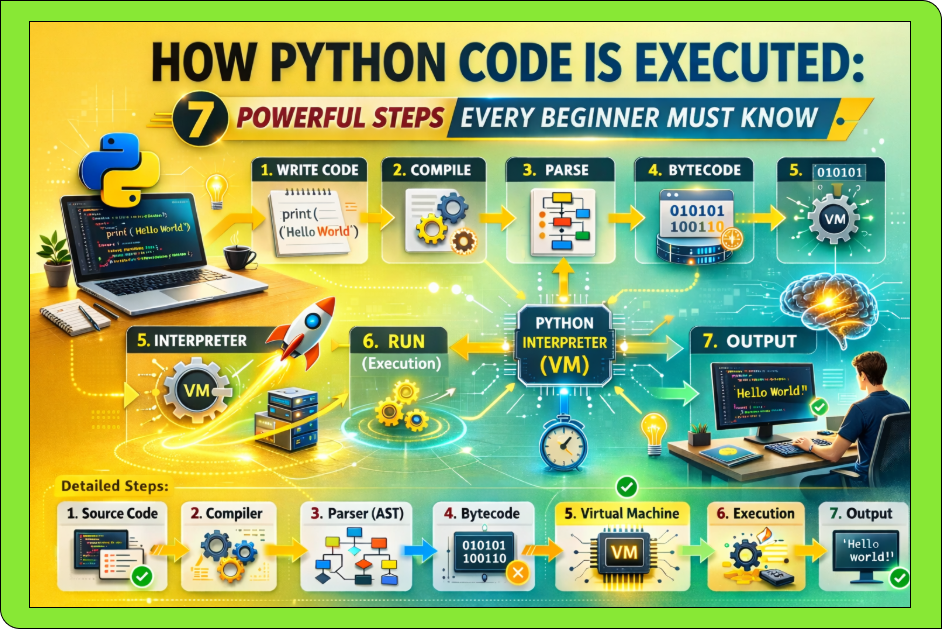
Step 1: Writing Python Source Code (.py File)
Python program likhne ke baad usse .py extension ke saath save kiya jata hai.
Example:
print("Hello Python")
Is stage par code:
- Human-readable hota hai
- Computer directly samajh nahi pata
- Sirf interpreter ke liye input hota hai
Ye How Python Code Is Executed ka pehla step hai.
Step 2: Compilation to Bytecode
Ye step beginners ko usually pata nahi hota. Python internally code ko bytecode me convert karta hai.
- Bytecode low-level instruction hoti hai
- Ye machine language nahi hoti
.pycfile ke roop me store ho sakti hai
Bytecode generate hone ke baad execution fast ho jata hai. Is hidden step ki wajah se How Python Code Is Executed process efficient hota hai.
Step 3: Python Virtual Machine (PVM)
Bytecode ko execute karta hai Python Virtual Machine (PVM).
PVM:
- Bytecode ko read karta hai
- Instructions ko machine-level operations me convert karta hai
- Output generate karta hai
Yahin par actual execution hota hai. Isliye bola jata hai ki How Python Code Is Executed ka core part PVM hai.
Step 4: Runtime Execution
Runtime par:
- Variables memory me allocate hote hain
- Data types decide hote hain
- Functions call hote hain
- Statements execute hote hain
Agar koi error hoti hai (jaise TypeError, NameError), to wahi runtime par dikhti hai.
Is wajah se Python ko dynamically typed language kaha jata hai.
Step 5: Error Handling During Execution
Agar Python code me koi galti hoti hai, to interpreter turant execution rok deta hai.
Common errors:
- SyntaxError
- NameError
- TypeError
- IndentationError
Example:
print(name)
Agar name define nahi hai, to execution ruk jayega.
Errors ka flow samajhna How Python Code Is Executed ko deeply samajhne ka part hai.
Step 6: Output Generation
Agar code successfully execute ho jata hai:
- Output screen par aata hai
- File me write hota hai
- Ya kisi aur program ko pass hota hai
Example:
a = 10
b = 20
print(a + b)
Output:
30
Is stage par Python execution complete hota hai.
Step 7: Program Termination
Execution ke baad:
- Memory clean hoti hai
- Variables destroy hote hain
- Program exit ho jata hai
Ye final step hota hai How Python Code Is Executed lifecycle ka.
Flowchart: How Python Code Is Executed
Simple flow:
- Write Python Code
- Interpreter Reads Code
- Bytecode Generated
- PVM Executes Bytecode
- Output or Error
Is flow ko samajhne ke baad Python ka behavior clear ho jata hai.
How Python Code Is Executed vs Compiled Languages
Python aur C jaise compiled languages me difference hota hai:
- Python line by line execute hota hai
- C pehle compile hoti hai, phir execute
- Python debugging easy hoti hai
- Compiled languages faster hoti hain
Ye comparison samajhne se How Python Code Is Executed aur bhi clear ho jata hai.
Why Understanding How Python Code Is Executed Matters
Agar aap:
- Debugging seekhna chahte ho
- Faster code likhna chahte ho
- Advanced Python concepts samajhna chahte ho
To ye topic must hai. Execution process samajhne se aap blindly code nahi likhte, balki logically sochte ho.
Common Misunderstandings Beginners Have
- Python directly machine language me run hoti hai
- Python slow hoti hai (always false)
- Bytecode file manually banani padti hai
- Interpreter sirf syntax check karta hai
Ye sab myths How Python Code Is Executed samajhne se clear ho jate hain.
Best Practices While Writing Python Code
- Clean aur readable code likhein
- Errors ko ignore na karein
- Execution flow samajh kar code likhein
- Comments ka use karein
Ye habits aapko professional Python developer banne me help karti hain.
Conclusion
Is complete guide me humne How Python Code Is Executed ko beginner-friendly language me samjha. Source code se lekar output tak ka pura process clearly explain kiya gaya hai.
Agar aap Python me aage badhna chahte ho — chahe web development, data science ya automation — to execution process samajhna aapki foundation strong banata hai.