
Introduction
Python me data ko store karne ke liye sirf ek hi structure ka use nahi hota. Different situations ke liye different data types hote hain. List aur Tuple dono ka kaam multiple values ko ek saath store karna hota hai, lekin unka behavior aur use-case kaafi alag hota hai.
Difference Between Python Lists and Tuples samajhne ka matlab hai:
- Kab List use karni chahiye
- Kab Tuple better choice hoti hai
- Performance aur memory kaise affect hoti hai
- Data safety ka role kya hai
Agar aap Python ko sirf syntax level par nahi balki professional level par seekhna chahte ho, to ye topic aapki foundation strong karega.
Python List aur Tuple me difference kya hai?
Dono hi Python ke sequence data types hain, dono me multiple values store hoti hain, syntax bhi kaafi similar lagta hai — phir bhi real projects me inka use alag-alag hota hai. Agar aap Difference Between Python Lists and Tuples clearly nahi samajhte, to aage chal kar bugs, performance issues aur design mistakes ho sakti hain.
Is detailed guide me hum Difference Between Python Lists and Tuples ko bilkul simple language me, real-life examples aur practical comparisons ke saath samjhenge — beginner se intermediate level tak.
What Is a Python List?
Python List ek ordered collection hoti hai jisme multiple values store ki ja sakti hain.
List ki khas baatein:
- Ordered hoti hai
- Mutable hoti hai (change ho sakti hai)
- Duplicate values allow hoti hain
- Square brackets
[]ka use hota hai
Example:
numbers = [10, 20, 30, 40]
names = ["Rahul", "Mukesh", "Amit"]
List ka use tab hota hai jab data ko future me modify karna ho. Isi point se Difference Between Python Lists and Tuples ka main concept shuru hota hai.
What Is a Python Tuple?
Python Tuple bhi ek ordered collection hoti hai, lekin ye immutable hoti hai.
Tuple ki khas baatein:
- Ordered hoti hai
- Immutable hoti hai (change nahi hoti)
- Duplicate values allow hoti hain
- Parentheses
()ka use hota hai
Example:
colors = ("red", "green", "blue")
coordinates = (10, 20)
Tuple ka main purpose hota hai fixed data ko safely store karna.
Difference Between Python Lists and Tuples (Quick Overview)
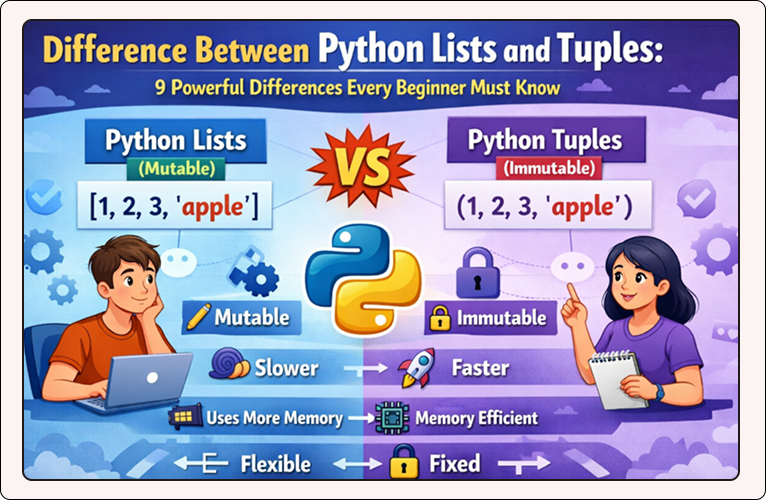
| Feature | List | Tuple |
|---|---|---|
| Mutability | Mutable | Immutable |
| Syntax | [] | () |
| Performance | Slower | Faster |
| Memory Usage | More | Less |
| Data Safety | Low | High |
Ye table ek quick idea deta hai, lekin ab hum Difference Between Python Lists and Tuples ko deeply samjhenge.
1. Mutability: List vs Tuple
Ye sabse bada aur important difference hai.
List (Mutable):
nums = [1, 2, 3]
nums[0] = 10
print(nums)
Output:
[10, 2, 3]
Tuple (Immutable):
nums = (1, 2, 3)
nums[0] = 10
Output:
TypeError: 'tuple' object does not support item assignment
Iska matlab:
👉 List change ho sakti hai, Tuple nahi
Ye point Difference Between Python Lists and Tuples ka core hai.
2. Performance Difference
Tuple performance ke mamle me list se better hoti hai.
- Tuple faster hoti hai
- Iteration me kam time lagta hai
- Fixed structure hone ki wajah se optimization better hota hai
Agar aapko sirf read-only data chahiye, to tuple best choice hoti hai. Isi wajah se Difference Between Python Lists and Tuples performance perspective se important hai.
3. Memory Usage
Tuple list ke comparison me kam memory use karti hai.
- List: Extra memory for modification
- Tuple: Fixed size, less overhead
Large data handling me ye difference kaafi matter karta hai.
4. Syntax Difference
List Syntax:
data = [1, 2, 3]
Tuple Syntax:
data = (1, 2, 3)
Single element tuple banate time comma zaroori hota hai:
single = (5,)
Ye chhoti si baat beginners aksar miss kar dete hain.
5. Built-in Methods
List Methods (Zyada):
- append()
- remove()
- pop()
- sort()
- reverse()
Tuple Methods (Sirf 2):
- count()
- index()
Methods ka difference bhi clearly batata hai Difference Between Python Lists and Tuples.
6. Data Safety and Integrity
Tuple immutable hone ki wajah se data safe rehta hai.
Use cases:
- Database records
- Configuration values
- Fixed coordinates
List me data accidentally change ho sakta hai, tuple me nahi.
7. Use Case Difference (Real-Life Examples)
Use List When:
- Shopping cart items
- User input data
- Dynamic values
Use Tuple When:
- Latitude & Longitude
- Days of week
- Fixed settings
Real projects me sahi choice karna Difference Between Python Lists and Tuples samajhne se hi possible hai.
8. Tuple as Dictionary Key
Tuple dictionary ke key ban sakti hai, list nahi.
location = {(28.6, 77.2): "Delhi"}
List hashable nahi hoti, isliye key nahi ban sakti.
9. When to Use List and When to Use Tuple
Simple rule:
- Change chahiye → List
- Safety + speed chahiye → Tuple
Ye clarity beginners ko bahut aage tak help karti hai.
Common Mistakes Beginners Make
- Har jagah list ka use karna
- Tuple ko change karne ki koshish
- Performance ignore karna
- Wrong data type choose karna
In mistakes se bachne ke liye Difference Between Python Lists and Tuples ko clearly samajhna zaroori hai.
Best Practices
- Fixed data ke liye tuple use karein
- Dynamic data ke liye list use karein
- Readability aur safety ko priority dein
- Code simple rakhein
Conclusion
Is complete guide me humne Difference Between Python Lists and Tuples ko beginner-friendly aur practical way me samjha. Dono ke features, performance, memory usage aur real-life use cases clearly explain kiye gaye hain.
Agar aap Python me strong foundation banana chahte ho, to ye topic skip karna ek badi mistake hogi.